

Interior Design Email Marketing Strategies That Turn Subscribers into Clients
Interior design projects do not start with a contract. They start with trust. If you want more qualified inquiries, you need consistent communication that keeps your firm top of mind. That is where email becomes one of your strongest tools. At Sidemark, we help interior designers turn subscribers into paying clients through structured interior design marketing systems. You are not just sending updates. You are guiding prospects from curiosity to consultation.
Email marketing for interior designers allows you to speak directly to homeowners who are already interested in your work. With the right strategy, your interior designer email list becomes a steady source of project inquiries. In this guide, you will learn how to use interior design email marketing to nurture leads, segment your audience, automate follow-ups, and convert readers into booked consultations.

Rethinking Email Marketing for Interior Designers
Email is not just another marketing task; it is a direct connection to people who have already shown interest in your work. By rethinking how you use email, you can turn casual subscribers into active clients.
Beyond Newsletters: Using Email as a Growth Engine
Email marketing nurtures leads through their decision-making process.Interior design projects often involve multiple steps. Potential clients may spend weeks or months browsing portfolios, comparing styles, and estimating budgets. Email marketing for interior designerskeeps your firm visible during this decision-making journey and positions you as a trusted resource.
Instead of sending occasional updates, you can use email as an active part of your interior design marketing strategy. Every message should guide readers toward a consultation by offering actionable insights or showing your value.
Emails can help you:
Introduce your design philosophy and approach, giving potential clients a sense of your style.
Explain services with step-by-step clarity, showing how you handle each phase of a project.
Share practical tips on project planning, budgeting, or material selection.
Highlight real client transformations to demonstrate results and inspire trust.
When structured thoughtfully, interior design email marketing becomes more than a newsletter tool. It creates a continuous growth channel, turning passive subscribers into prospective clients who are ready to engage.
Why Traditional Approaches May Not Work
Generic campaigns rarely convert.Many interior designers send the same content to their entire email list, assuming quantity alone will drive results. In reality, this approach often results in low open rates, minimal clicks, and few consultation requests.
Common mistakes include:
Sending identical content to all subscribers without segmenting by interests or project type.
Using vague subject lines that do not communicate a clear benefit.
Overlooking behavioral triggers, such as downloads, link clicks, or inquiries.
Email marketing for interior designers performs best when messages are tailored to the audience. Relevant content increases engagement. Higher engagement increases the likelihood of inquiries and bookings.
Creating a Subscriber-Centric Strategy
Building a strong email marketing approach begins with putting your audience at the center. By knowing your subscribers, you can craft messages that feel personal and relevant rather than generic and overlooked.
Understanding Your Ideal Client
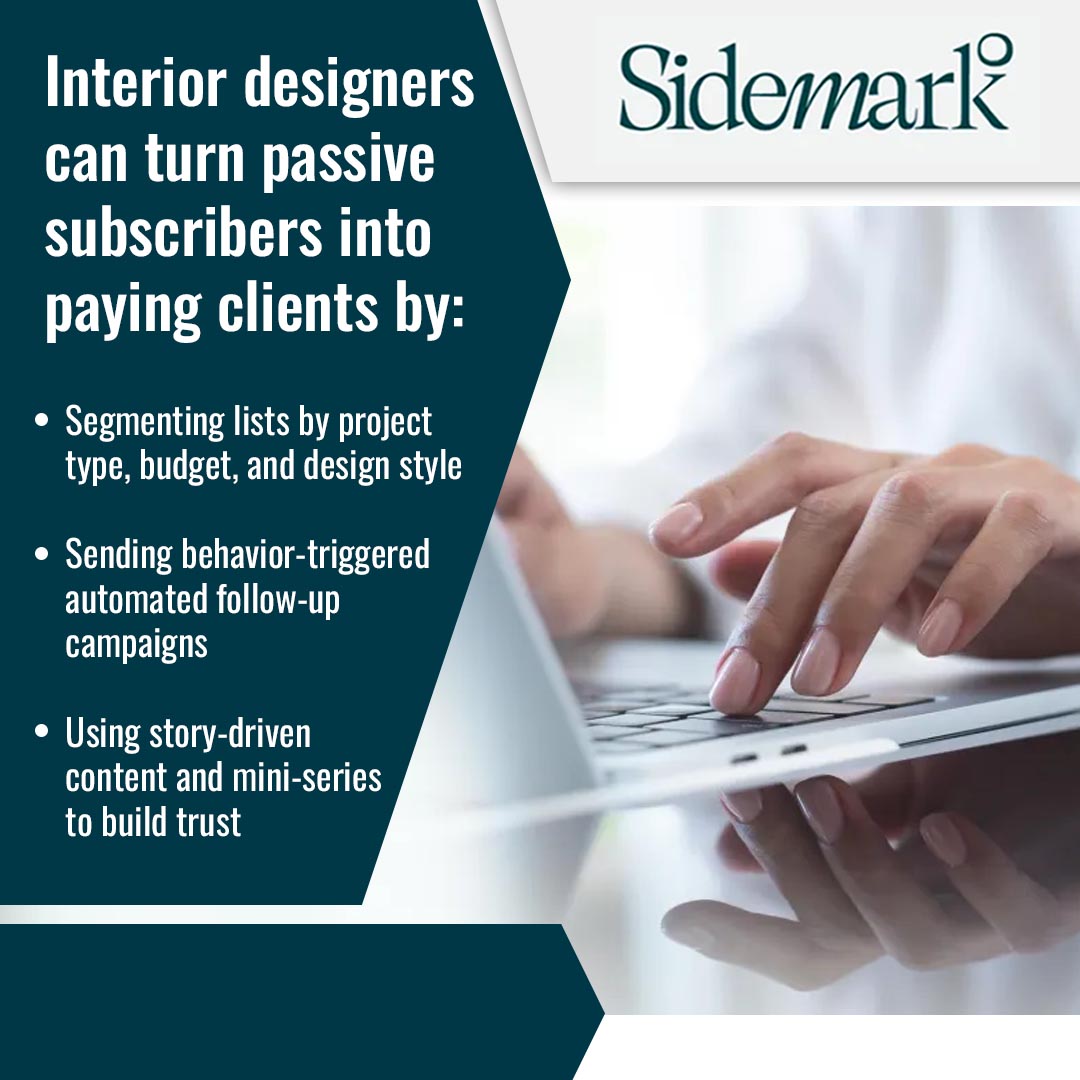
Know your subscribers’ preferences to increase engagement.Every client approaches design differently. Some are planning full renovations, while others are interested in styling or small-scale updates. Segmenting your interior designer email list lets you target each audience with content that resonates.
You can organize messages by:
Project type
Budget range
Design style preference
Location
You can also create tailored journeys for different subscriber groups:
New leads who are learning about your services
Active prospects considering a project
Past clients who may return for updates or additional work
Segmenting this way keeps your interior design marketing relevant to where clients are in their decision process and improves the likelihood that they take the next step.
Building Your Interior Designer Email List Strategically
Attract subscribers with valuable resources and incentives.Your email list grows by offering real value to potential clients. Lead magnets such as style quizzes, downloadable guides, renovation planning checklists, or budget worksheets give subscribers a reason to join and interact.
You can also encourage sign-ups by offering:
Early access to project reveals
Invitations to local design events
Exclusive behind-the-scenes content
These approaches attract subscribers who are genuinely interested in your services and more likely to schedule consultations.
Maintaining Quality Over Quantity
Focus on engaged subscribers instead of list size.A large email list has little effect if recipients ignore your messages. Regularly reviewing your list and removing inactive contacts keeps engagement high.
Best practices include:
Re-engaging cold subscribers with targeted campaigns
Monitoring bounce rates and spam complaints
Tracking clicks and responses to identify active participants
Subscribers who open, click, and respond are far more valuable than passive contacts. At Sidemark, we help interior designers focus on building a high-quality audience that converts readers into clients.
Innovative Email Campaign Ideas for Interior Designers
Email campaigns can do more than just deliver updates. They offer a way to connect with subscribers, inspire action, and build loyalty over time.
Story-Driven Campaigns
Use client transformations to demonstrate your expertise.Before-and-after stories resonate because they clearly show the results of your work. Share the client’s initial design challenge, explain your solution, and include visual highlights that illustrate the transformation. Always add a clear call-to-action for scheduling a consultation.
These stories give subscribers a sense of what it is like to work with you, while building trust and credibility through real examples of your interior design services.
Mini-Course or Tips Series
Educate subscribers with actionable design advice. A short email series delivers value over multiple touchpoints, keeping prospects engaged for longer. You can cover topics like space planning basics, choosing color palettes, furniture layout strategies, or lighting tips.
This positions you as a knowledgeable resource and reinforces your role in guiding clients through design decisions, strengthening your interior design marketing efforts.
Interactive Emails
Engage subscribers through participation. Emails that invite interaction capture attention and provide insights into your audience’s preferences. Consider polls about design styles, quick surveys on home improvement priorities, or “choose your favorite look” features.
Responses from these emails guide future campaigns, allowing you to tailor content to subscriber interests and improve the effectiveness of email marketing for interior designers.
Local and Seasonal Updates
Share content relevant to local trends or seasonal design needs. Design priorities often shift with the seasons and local trends. Emails can include holiday decorating suggestions, summer outdoor living ideas, collaborations with local showrooms, or invitations to area events.
These timely updates keep your interior designer email list engaged, encouraging readers to interact with your brand regularly.
Advanced Use of Automation in Email Marketing
Automation gives your email campaigns consistency and responsiveness without adding extra work. By setting up sequences that react to subscriber behavior, you can provide relevant content at the right moment and maintain a steady connection with potential clients.
Triggered Emails Based on Subscriber Actions
Behavior-driven emails reach the right people at the right time. You can use automation to respond automatically to how subscribers interact with your content. For example, if someone downloads a design guide, you can follow up with additional tips related to that topic.
If a prospect visits your portfolio, you might send an email inviting them to schedule a consultation. Subscribers who view pricing pages can receive detailed service descriptions tailored to their interests. These triggered sequences keep your audience engaged without you having to manually send each message, allowing your interior design email marketing to feel timely and personal.
Lifecycle Email Sequences
Automate sequences for different client stages.A structured lifecycle approach helps you communicate relevant content to leads, prospects, and past clients.

Organizing your campaigns in this way strengthens your overall interior design marketing strategy and keeps your messaging aligned with each audience segment.
Drip Campaigns for High-Value Projects
Guide premium leads through a curated process.For high-ticket interior design services, prospects often need detailed information and reassurance. Drip campaigns allow you to gradually provide this, covering your design process, project timelines, pricing expectations, and client testimonials.
Each email builds trust, demonstrates your expertise, and helps move leads steadily toward booking a consultation. By guiding premium prospects through a carefully planned sequence, your interior design email marketing becomes a strategic tool that drives real client conversions.
Measuring Performance and Optimizing Campaigns
Measuring how your emails perform gives you a clear picture of what drives results. Tracking the right data helps you see which messages lead to real client inquiries and bookings.
Key Metrics Beyond Open Rates
Track actions that indicate business outcomes. Open rates show interest, but your focus should be on the actions subscribers take. Look at click-to-book rates, consultation requests, and project inquiries. Monitor revenue generated directly from email campaigns.
These metrics reveal which messages move potential clients toward hiring you. By focusing on results rather than just opens, you align your emails with your business goals and spot opportunities to improve your interior design marketing strategy.
Using Insights to Refine Messaging
Adjust content and design based on subscriber behavior. Pay attention to which project highlights, design tips, or tips series get the most engagement.
If a particular showcase receives higher clicks, replicate similar content. If engagement drops, try new subject lines, shorter emails, or different sending times. Every insight provides a chance to fine-tune your approach and make your emails more relevant to your audience.
A/B Testing for Subject Lines and Content
Test different approaches to improve results.Comparing two subject lines, short versus long emails, or educational versus promotional messages allows you to see what resonates. Even small adjustments can improve click rates, bookings, and overall engagement.
Applying these tests regularly keeps your interior design email marketing campaigns fresh and effective, helping you convert subscribers into clients more consistently.
Integrating Email Marketing into a Broader Interior Design Marketing Plan
Bringing all your marketing efforts together creates a more consistent experience for your audience. Coordinating email with your other channels keeps your brand message clear and builds stronger connections with potential clients.
Aligning Campaigns with Social Media and Website Content
Coordinate messaging across channels for consistency.Your email campaigns should complement what you share on social media and your website. For example, if you publish a blog post on redesigning living rooms, send a summary with a link to your subscribers. At the same time, share highlights from the same post on Instagram or Facebook to encourage sign-ups for your interior designer email list.
Linking portfolio updates through both email and your website keeps your audience engaged and aware of your latest projects. When each channel supports the other, your brand presence grows stronger, and potential clients see a cohesive, professional image of your work.
Leveraging Email to Support Lead Conversion
Emails can move subscribers toward bookings.Every email you send should guide readers toward taking the next step with your business. Include clear actions such as scheduling a consultation, requesting a proposal, or downloading a design guide.
By keeping calls-to-action visible and relevant, your interior design email marketing campaigns become a direct tool for generating inquiries. Consistent follow-ups through email keep your services in front of prospects without requiring constant manual effort.
Coordinating with Paid Ads and Local Marketing
Use email data to refine targeting and measure ROI.Analyzing subscriber activity gives insight into what projects and content your audience prefers. You can identify which services get the most clicks, which guides are downloaded frequently, and which emails drive the most consultation requests.
This information can then shape your paid advertising campaigns and local marketing efforts, helping you reach potential clients more accurately. By linking email performance with other marketing initiatives, you create a smarter strategy that targets the right people at the right time.
How Sidemark Supports Interior Designers in Advanced Email Marketing
Building and maintaining a strong email marketing program can feel overwhelming, especially while managing client projects. With the right support, you can create campaigns that consistently connect with your audience and encourage action.
Done-for-You Campaign Services
Sidemark, based in Addison, Texas, creates professional campaigns tailored for designers.We take care of the planning, writing, and design so you can focus on your projects. Our team develops a complete campaign strategy, writes copy that speaks directly to your audience, designs layouts that reflect your brand, sets up automation workflows, and plans audience segmentation. Each campaign is structured to guide your subscribers from initial interest to consultation requests, helping your interior design email marketing deliver measurable results.
Tools for DIY Email Marketing
We offer software for managing your campaigns.If you prefer to handle campaigns yourself, you can use drag-and-drop email builders, pre-built automation workflows, audience segmentation features, and performance dashboards. These tools let you grow and manage your interior designer email list efficiently while keeping everything organized in one platform.
Coaching, Community, and Support
Access guidance, community, and ongoing support.Weekly coaching sessions and marketing training provide practical advice for improving campaigns. The Sidemark community allows collaboration with other interior designers, while 24/7 support helps troubleshoot issues or answer questions, giving you the resources to refine your interior design marketing over time.
Start Converting Subscribers into Clients with Sidemark
Sidemark helps interior designers create structured email campaigns, manage growing email lists, and connect directly with potential clients. Call us at (214) 984-3383 or [email protected] to schedule a personalized strategy consultation and begin building a targeted interior design marketing system that delivers measurable results.